MCQ
Q.
Match the Temple with its Architecture style:
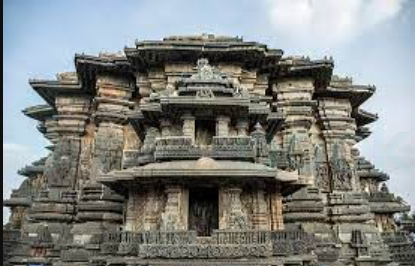
| a) Dashavatara Vishnu Temple, Deogarh, UP | 1) Nagara Style |
| b) The Hoysalas temples at Belur | 2) Dravida Style |
| c) Shore Temple, Mahabalipuram | 3) Vesara Style |
Correct Answer: A
The correct answer is a-1, b-3, c-2.
 Key Points
- Basically, there are 3 kinds of temple architecture:
- Vesara Style
- Nagara Style
- Dravida Style
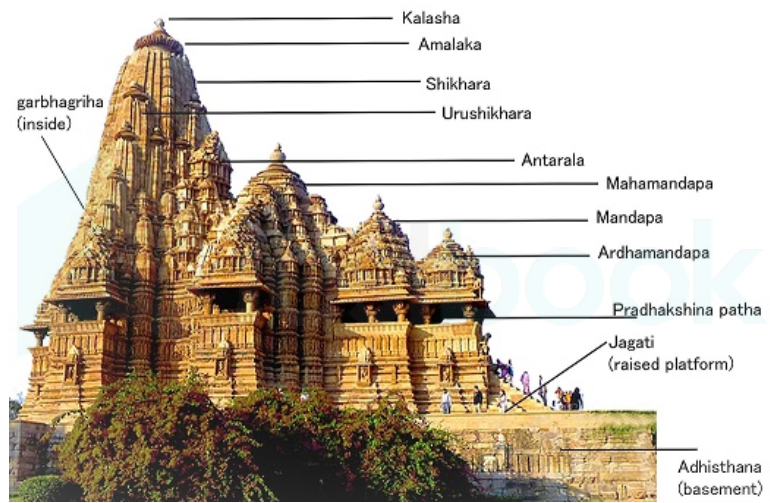
- Nagara Style:
- The Nagara style is associated with the land between the Himalayas and Vindhyas and developed regionally in the Northern parts of India.
- The structure comprises two buildings, the main taller shrine and an adjoining mandapa which is short.
- The foremost difference between these two buildings is the shape of the shikhara.
- In the main shrine, a bell-shaped structure is added.
- Originally in Nagara style, there were no pillars.
- Example: Dashavatara Vishnu Temple, Deogarh, UP, Khajuraho Temples (MP), Konark Sun Temple.
- Dravida Style:
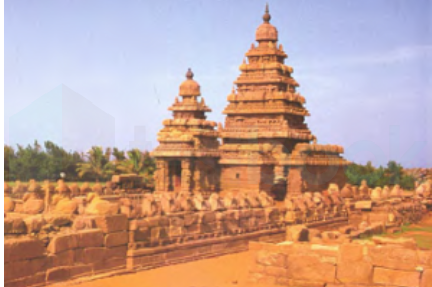
- Dravida style advanced in the South, throughout the Chola Empire, between 9th–12th Century AD.
- It is seen in the region between the Krishna and Kaveri rivers.
- In Dravida, style temple is situated within an ambulatory hall.
- There are multiple stories called Vimana, built above the Garbhagriha.
- Mandapa is a pillared hall.
- Gopuram is the high gate in this courtyard.
- Example: Shore Temple, Mahabalipuram, Brihadiswara Temple, Tanjore.
- Vesara Style:
- Vesara style is at times related to the region between the Krishna River and Vindhyas that emerged during the early medieval period.
- Many temples in Central India and Deccan have used the Vesara style with regional modifications.
- It is a fusion style of both Nagara and Dravida styles of temple architecture.
- In this style structures are finely finished, figures are much decorated and well-polished.
- Example: The Hoysalas temples at Belur.