MCQ
Q.
The largest gland in the human body is
Correct Answer: B
The correct answer is Liver.
 Key Points
- The liver is the largest gland in the human body.
- It is made up of specialized cells called hepatocytes.
- It is situated on the right side of the stomach in the human body.
- The study of the liver is called hepatology.
- It is the largest metabolic organ in the human body.
- It is the organ that stores a large amount of vitamin A.
- Ammonia and urea are produced in the liver.
- Hepatitis is a viral disease that affects the liver.
- The liver is known as the "chemical lab of the human body".
- The liver is the highest temperature-producing organ.
 Additional Information
- The brain is the center of coordination in the human body.
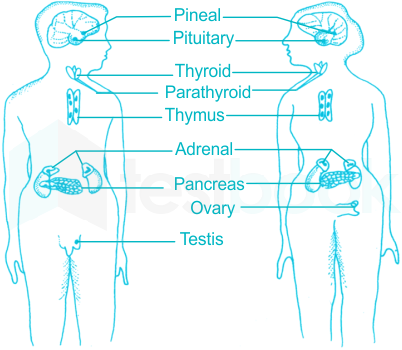
- The pancreas secretes enzymes and hormones.
- Insulin and glucagon are the hormones secreted by Pancreas.
- The thyroid gland is the largest endocrine gland in the human body.
- Thyroxin and calcitonin are the hormones secreted by the thyroid gland.
- Pituitary Gland
- The pituitary gland is a gland that is located at the base of the brain and right behind the bridge of the nose. It is mainly responsible for sexual maturation, reproduction, etc.
- The pituitary gland is also called the 'master endocrine gland' and it is a small pea-sized gland.
- The pituitary gland is controlled by Hypothalamus.
- The hypothalamus sends signals to the pituitary to release or inhibit pituitary hormone production.
- The pituitary is called the master gland because it controls various other glands.
- Hence, it could be concluded that the pituitary gland is also called the 'master endocrine gland' because it regulates the activities of other endocrine glands.