MCQ
111.
Which of the following is correct in context to The Nagara, the Dravida:
Correct Answer: C
The correct answer is These are the main two styles of temple architecture in India.
 Key Points
- The main component of the Indian temple architecture are the following:
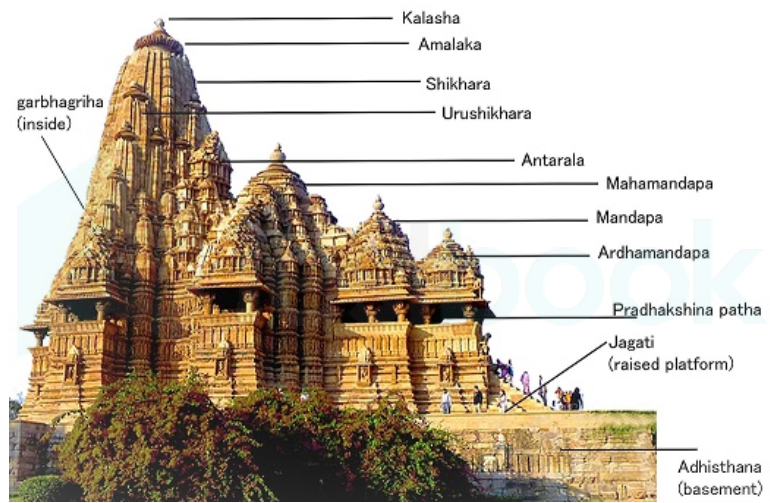
- Garbhagriha (womb-house):. It is a cave-like structure housing the chief deity of the temple.
- Mandapa: It is the entrance of the temple.
- Shikhara/Vimana: It is a mountain-like structure on top. In north India, it is called Shikhara.
- Shape: Curve.
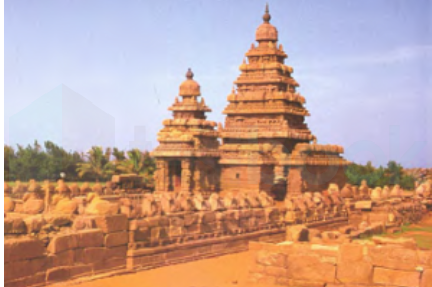
- In south India, it is called Vimana.
- Shape: Pyramidal tower.
- Amalaka: Notched stone disk at the top of the temple. Mostly seen in north Indian temples.
- Pedestal: It is a raised platform of stone on which temples are built.
 Important Points
| Basis | Nagara Architecture | Dravidian Architecture |
| Region | North India | South India |
| Dome | The Shikhara remains the most significant element of the temple. | Gopuram is the most prominent. It is designed and huge in size. |
| Central Tower | Curvilinear tower (Shikhara) made up of various layers of architectural elements and symmetric ground plan. There are a number of Shikharas. | The pyramidical shaped central tower (Vimana). There is only one Shikhara/ Vimana. |
| Tower | Multiple towers | Always a single tower. |
| Pedestal | Higher than the ground. | Approximately at ground level. |
| Purpose | Most of the temples in the Nagara style are only for religious purposes. |
|
| Examples |
|
|
| Misc. |
|
|
 Additional Information
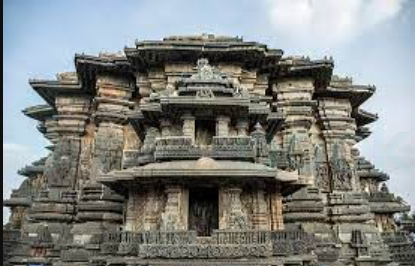
- Vesara Architecture:
- E.g: Ladkhan temple of Aihole.
- It has two principal components Vimana & Mandapa joined by Antrala.
- It is a mixture of both Nagara & Dravidian style of temple architecture.
- It is also known as Chalukya style or Karnataka style.
- It follows mostly Dravida style up to the boundaries and then Nagara style features in the superstructure.